
Carlo Birkholz
About Me
I am Assistant Professor (non-tenure track) at the
Chair of Development Economics and Global Political Economy
at the University of Göttingen, Germany.
I am also Junior Research Associate at
ZEW Mannheim, a
Joachim-Herz Add-on Fellow,
a member of the
Campus Institute Data Science (CIDAS),
and an external affiliate of the
Norwegian Centre for Taxation (NoCeT).
I received my Ph.D. from the University of Mannheim, and my dissertation was awarded third prize of the
KfW Award for Practice-Oriented Development Research.
My general research interests are in the fields of Development Economics, Political Economy, and Public Finance. In particular, I enjoy bringing together innovative data sources such as satellite imagery, household electricity consumption from smart meters, or web-scraped data with machine learning techniques such as random forests and large language models to answer economic questions otherwise difficult to study.
I receive funding from the German Research Foundation (DFG) for my project Distant Demand, Local Damage: Causal Evidence on Industrial Fishing in West Africa and Sand Mining in the Mekong.
My general research interests are in the fields of Development Economics, Political Economy, and Public Finance. In particular, I enjoy bringing together innovative data sources such as satellite imagery, household electricity consumption from smart meters, or web-scraped data with machine learning techniques such as random forests and large language models to answer economic questions otherwise difficult to study.
I receive funding from the German Research Foundation (DFG) for my project Distant Demand, Local Damage: Causal Evidence on Industrial Fishing in West Africa and Sand Mining in the Mekong.
News
- [September, 2026] Visit Fudan University, China.
Publications
-
Abstract
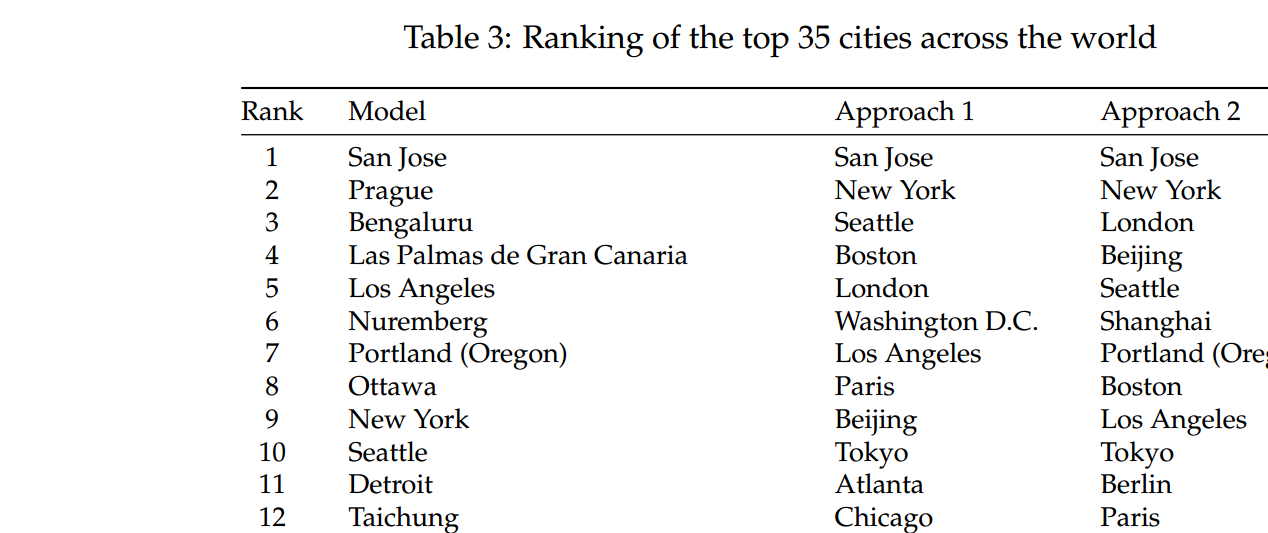
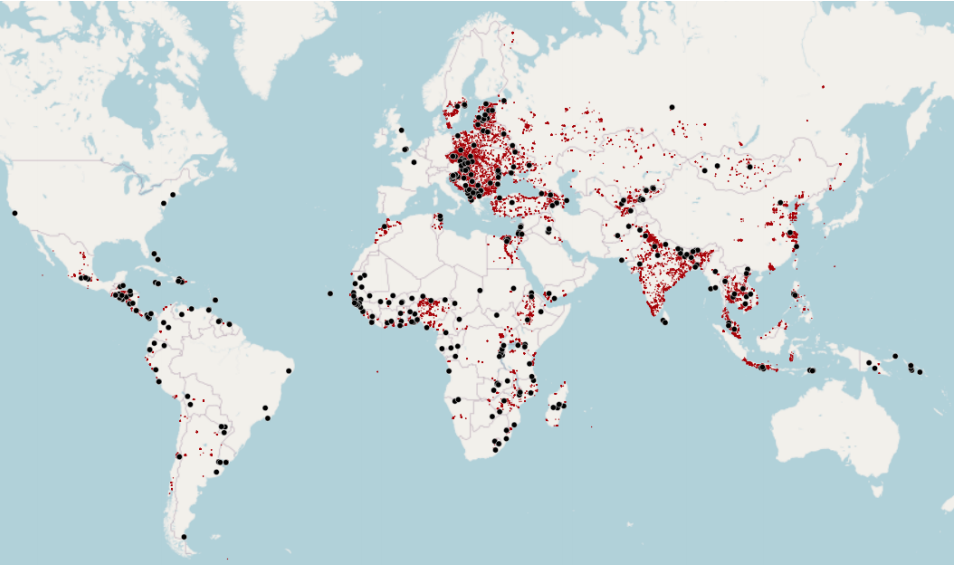
Can developing countries benefit from exporting opportunities in the growing sector of tradable services, given the near free information flow via the internet and wage differentials relative to developed countries? Focusing on the software development industry, we analyze data from 2.68 million software projects across 5200 locations, and estimate an economic geography model in which locations trade tasks. The results reveal three factors limiting exports: (i) significant productivity differences within and between countries; (ii) a notable decline in trade volumes with distance; (iii) sorting patterns among software developers that are suggestive of brain drain. -
 International Tax and Public Finance , 1-31 (2024)
Abstract
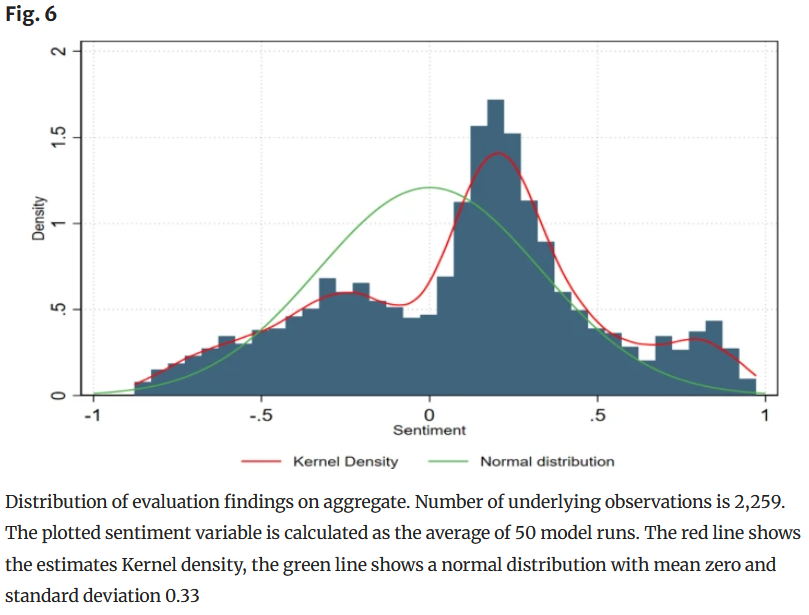
Independent and high-quality evaluations of government policies are an important input for designing evidence-based policy. Institutional frictions and lack of incentives to write such evaluations, on the other hand, carry the risk of turning the system into a costly beauty contest. We study one of the most advanced markets of policy evaluations in the world, the evaluations of EU Cohesion Policy interventions by the EU Member States. We use a large language model to quantify the findings of about 2,300 evaluations, and complement this data with our own survey of the evaluation authors. We show that the findings of evaluations are inconsistent with those of the academic literature on the output impacts of Cohesion Policy. Using further variation across Member States, our analysis suggests that the market of evaluations is rather oligopolistic within Member States, that it is very fragmented across the EU, and that there is often a strong involvement of managing authorities in the work of formally independent evaluators. These factors contribute to making the findings of the evaluations overly optimistic (beautiful) risking their relevance for (evidence-based) policy. We conclude by discussing reform options to make the evaluations of EU Cohesion Policy more unbiased and effective. -
Abstract
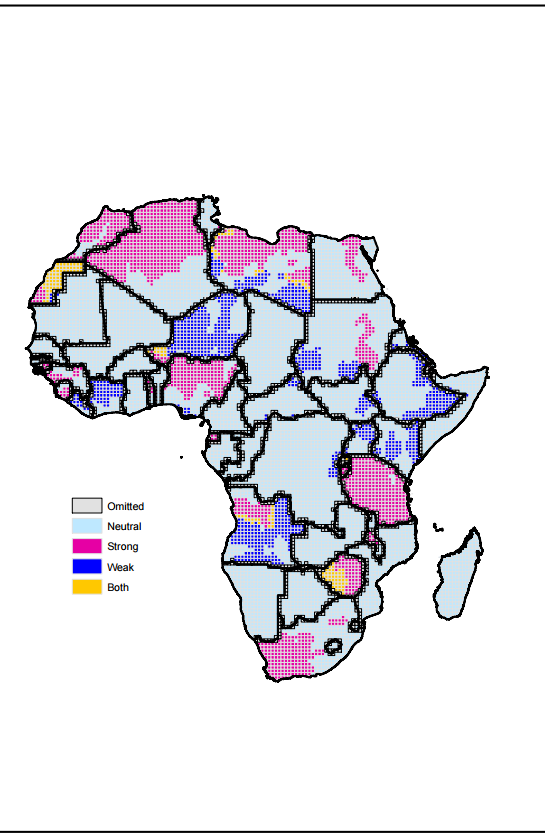
We study the spatial economic effects of mineral resource activity. Using geocoded data on mine openings and closures in Africa, we show that mining regions experience local booms while a mine is in operation. We then explore how mineral resources affect non-mining regions. Non-mining regions might be affected by mining activity due to deliberate government policies (e. g., regional redistribution) or due to various inadvertent country-level macroeconomic adjustments (e. g., Dutch Disease - type effects or decline in institutional quality). Our results suggest that mineral resources have heterogeneous effects on non-mining regions. Politically important regions such as capitals and leaders’ birth regions benefit economically while generic non-mining regions are, in general, worse off from mineral resource activity. Exploring mechanisms, we find that these spatial patterns emerge both due to deliberate government policies as well as Dutch-Disease-style macroeconomic adjustments that harm regions specializing in sectors other than mining. -
 Journal of Comparative Economics 51(1): 90-104 (2023)
Abstract
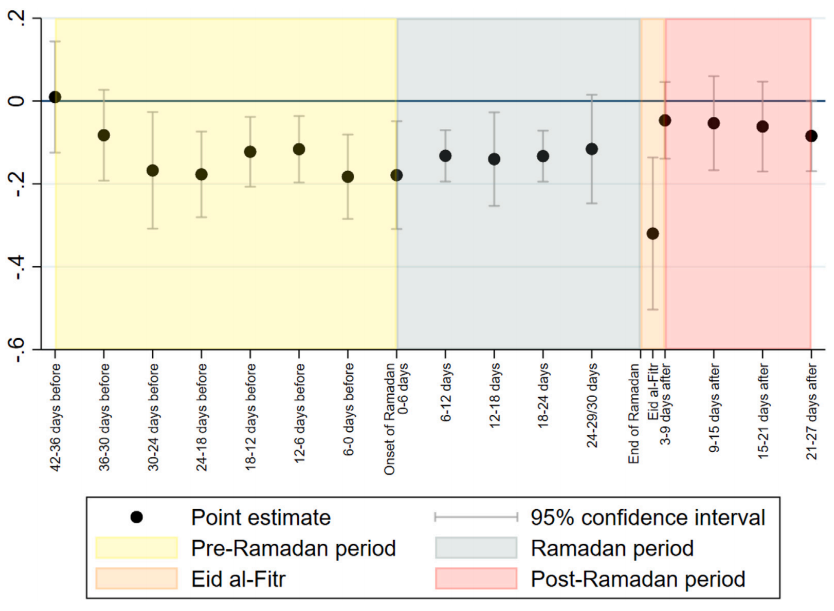
Ramadan has attracted negative publicity and criticism in Western countries with large Muslim immigrant populations. Are these attitudes justified? Does the behavior of Muslim immigrants negatively affect host populations during this period? This paper investigates one important dimension of immigrant behavior that is a source of concern: criminal activity. Using the universe of criminal offenses registered by the Swiss police authorities, the paper documents that during Ramadan, crimes committed by Muslim migrants decline by 11%. The mechanism behind this reduction most consistent with the empirical results, is one of changes in beliefs and values of immigrants. Other explanations, such as time spent on community events and declining physical ability play only a minor role.
Working Papers
-
Abstract
We study the economic implications of regional favoritism, a form of distributive politics that redistributes resources geographically within countries. Using enterprise surveys from low- and middle-income countries, we document that firms located close to leaders’ birthplaces grow substantially in sales and employment after leaders assume office. Firms in favored areas also experience increases in sales per worker, wages, and measured total factor productivity. These effects are short-lived, and operate through rising (public) demand for the non-tradable sector. We calibrate a simple structural model of resource misallocation on our estimates. This exercise implies that favoritism reduces output by 0.5% annually. -
Abstract
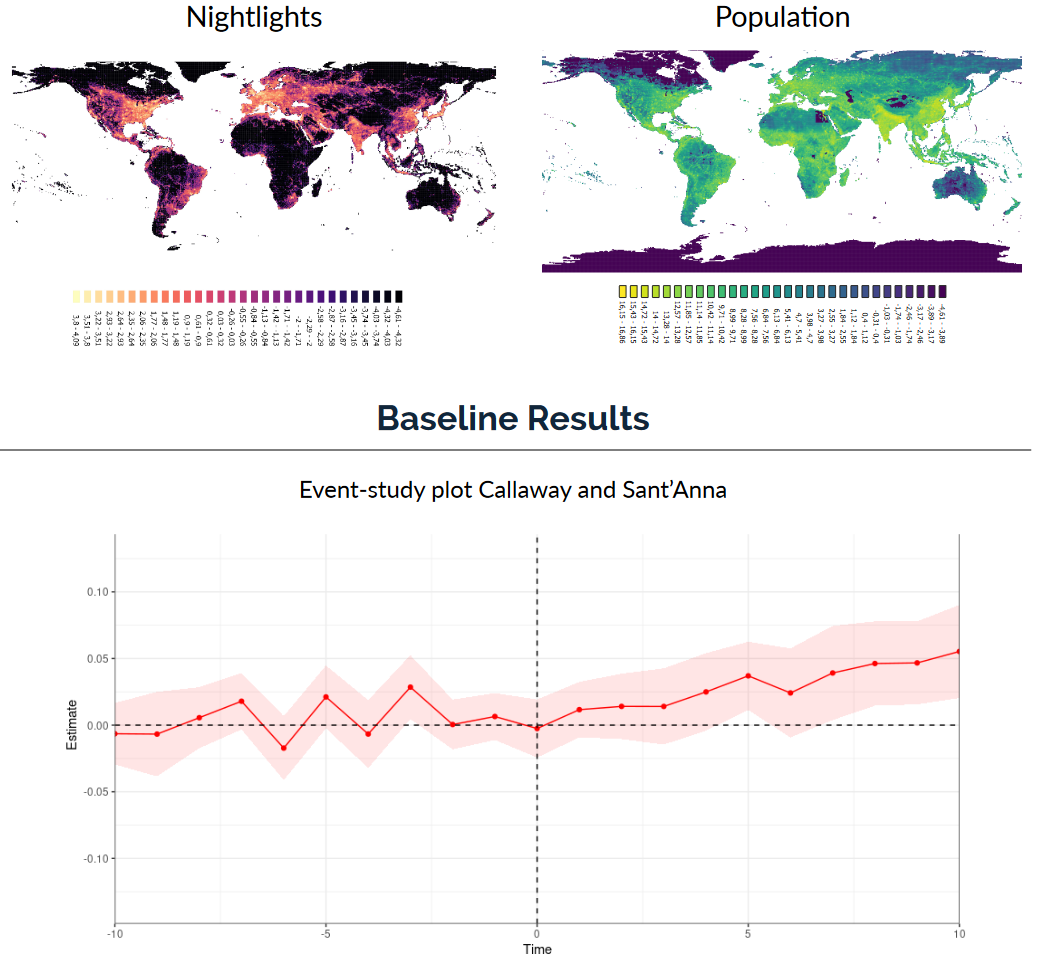
In this paper, we study the extent to which ministers engage in regional favoritism. We are the first to provide a comprehensive analysis of a larger set of the governing elite, not just focusing on the primary leader. We manually collect birthplaces of this governing elite globally. Combining this information with extended nighttime luminosity and novel population data over the period from 1992 to 2016, we utilize a staggered difference-in-differences estimator and find that birthplaces of ministers globally emit on average roughly 9 % more nightlight. This result is predominantly attributable to the African sub-sample. We find no evidence that the measured effect is driven by, or induces, migration to the home regions of ministers. The size of our data set lets us investigate heterogeneities along a number of dimensions: political power, ministerial portfolio, and the institutional setting.
Work in progress
- Consequences of Overfishing: Evidence from West Africa
- Chat(GPT)ing about inflation: Medias influence on households’ inflation expectations (with Rudi Bachmann)
- Do they actually move? Detecting tax evasion with smart meters (with Maximilian Todtenhaupt & Johannes Voget)
- Beyond additionality: The Impact of EU Cohesion Policy on Investments by the Member States (with Zareh Asatryan)
- Mexico City Policy: Causal analysis of direct and indirect effects (with Karina Kindler)
Teaching
- Macroeconomics II — Summer 26, Winter 26/27
- Geospatial Analysis in Development Economics — Summer 25, Winter 25/26, Winter 26/27 (planned)
- Innovative Data Sources in Economic Research — Summer 25, Summer 26
Policy Work
-
German Federal Ministry of Finance
Project description
In the Multiannual Financial Framework (MFF) 2021-2027, about 30 percent of all EU budgetary resources are allocated to cohesion. Additional amounts are made available to the European budget by Next Generation EU (NGEU) through REACT EU. The central goal of EU cohesion policy remains regional convergence. However, despite the substantial use of funds, convergence success is not assured. While there have been successes in East-West convergence, North-South divergence persists stubbornly. Against the background of these developments and methodological advances in the evaluation of EU regional policy, this project addresses, among others, the following questions: How is the "European added value" of an EU regional policy programme to be conceptually defined? How should the design and effectiveness of central rules of EU cohesion policy be assessed? What adjustments to the regional policy toolbox are necessary in terms of scope, instruments and rules?
Project output:Regional Studies (2026)Abstract
By international standards, the European Union’s Cohesion Policy (CP) evaluation system is well developed and institutionalised. This paper analyses the remaining shortcomings and proposes recommendations for further refinement. A broad CP objective function emerges as a key challenge. Evaluation culture is not equally developed in all member states, and evaluation markets suffer from a lack of international competition. There is still limited use of counterfactual methods which have become standard in the academic literature on the effectiveness of CP, and there may be tensions between policy learning and demonstrating accountability. The paper proposes innovations to make CP evaluations more credible and impactful. -
supported by the Strube Foundation
Project description
The Corona pandemic continues to have a major impact on social and economic activities in Europe at the end of 2021. Measures against the spread of the virus, such as lockdowns and short-time work, pose challenges to public finances in many countries due to the interplay of reduced tax revenues and higher government spending. To provide European countries with liquidity, the European Central Bank has therefore been buying government bonds in enormous volumes since 12 March 2020 as part of the specially launched Pandemic Emergency Purchase Programme (PEPP). The ceiling of 750 billion euros envisaged at the beginning has long been exceeded and since has been raised twice, to now 1,850 billion euros. With this order of magnitude, the PEPP occupies a firm place in terms of importance alongside the Public Sector Purchase Program, the ECB's other extensive bond-buying programme. Since the ECB reserves the right under the PEPP to deviate from the ECB capital key when distributing bond purchases among the euro states, the already existing question about the significance of the ECB for public debt financing in the euro area is intensified. Against this background, the aim of this research project is to present the development of bond purchases within the PEPP and PSPP, to trace the significance for individual euro countries and to analyse correlations with the ECB capital key and other parameters. The results are central to an assessment of the role of the ECB in the sovereign debt financing of European countries, as well as the long-term functioning and cohesion in the EU.
Project output:Magnitudes and Capital Key Divergence of the Eurosystem’s PSPP/PEPP Purchases